
Natural Gas Regulator Replacement & Gas Leak Repair Services in Port St. Lucie

What a natural gas regulator does
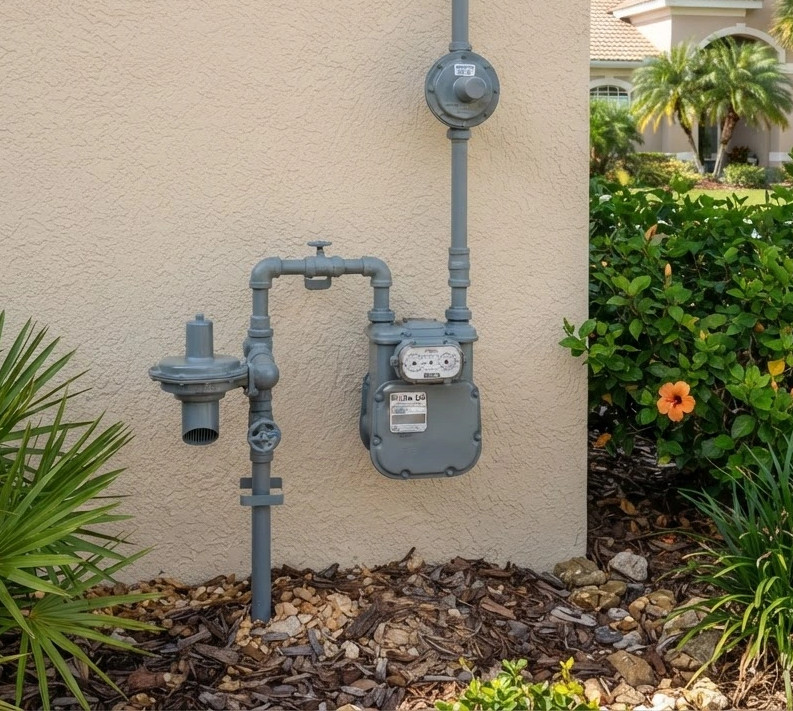
A gas regulator lowers incoming gas pressure and holds it steady so every appliance gets exactly what it was designed to burn. Without it, appliances get too much pressure (a safety hazard) or too little (they won't light or run properly).
The regulator at the meter belongs to Florida City Gas.
Many homes and most commercial buildings also have regulators on the owner's side of the meter, especially systems that run elevated pressure to a tankless water heater, generator, pool heater, or kitchen equipment. Those customer-side regulators, and all the piping after the meter, are the property owner's responsibility to maintain and repair.

Signs your gas regulator is failing
The most telling sign is that some gas appliances work and others don't. A regulator that can't deliver full flow starves the biggest users first, so the tankless water heater or pool heater quits while the stove still lights.
Other warning signs:
A gas smell (rotten eggs) near the regulator, meter, or outside wall
A hissing sound at the regulator
Weak, yellow, or flickering burner flames instead of steady blue
Appliances that light, then shut off or throw error codes
Visible rust, cracks, or a vent opening that's clogged or facing up
Florida City Gas detected a leak at your meter and red-tagged the property
How Florida weather damages outdoor gas regulators
Outdoor regulators on the Treasure Coast live in heat, humidity, salt air, and driving rain, and that wears them out faster than in most of the country.
Water intrusion: sprinklers, storms, and roof runoff push water into the vent, where it corrodes the internal spring and diaphragm.
Clogged vents: mud daubers, spiders, and ants build nests in the vent opening, so the regulator can't breathe or relieve pressure.
Rust and salt air: coastal moisture corrodes the body and fittings, especially in Port St. Lucie neighborhoods near the river and in Vero Beach.
Sun and heat: UV exposure and daily heat cycles harden the rubber diaphragm until it cracks or loses its seal.
Physical damage: lawn equipment, landscaping, and hurricane debris knock regulators out of position.
Gas riser leaks at the poly-to-galvanized transition
The gas riser is where your underground yellow poly gas line comes up out of the ground and connects to galvanized steel pipe at the building. That transition point is one of the most common places for a natural gas leak in Port St. Lucie.
Why risers fail:
The steel section sits right at soil level, where it stays wet from irrigation and rain and corrodes from the outside in.
Mulch, rock, and soil piled against the riser trap moisture against the metal.
Ground settling and nearby digging put stress on the transition fitting.
Older installations may not have the protective coating or wrap that today's code requires.
A leaking riser usually can't be patched. The fix is to dig out around the riser, cut back to clean poly, and install a new transition riser and fittings, then pressure-test the system before gas is restored.
Rusty galvanized gas piping
Galvanized pipe is coated in zinc to resist rust, but Florida's humidity and salt air eat through that coating over time. Once rust starts, it pits the pipe wall and loosens threaded joints until gas begins to escape.
Look for orange or flaking rust, bubbling paint, crusty buildup at fittings and unions, or pipe that's been buried, painted over, or sitting against wet stucco. Corroded sections should be replaced, not wire-brushed and painted. We replace the damaged pipe, protect exposed runs properly, and pressure-test the entire line.
Red-tagged by Florida City Gas? Here's what to do
If a Florida City Gas technician finds a leak or unsafe condition, they'll shut off or lock the meter and leave a red tag. Gas stays off until a licensed contractor makes the repair and the system passes the required test and inspection.
Keep the tag and note what the technician wrote. It tells us where to start.
Call a licensed gas contractor. NextGen holds a Florida certified plumbing contractor license (CFC1430520), which covers gas piping statewide.
We locate the leak, replace the failed regulator, riser, or pipe, and pull the permit when one is required.
We pressure-test the system and coordinate with the building department and Florida City Gas to get your gas turned back on.
NextGen Plumbing and Gas is listed on the Florida City Gas website as a preferred and verfied vendor for the Treasure Coast and Port St. Lucie area.
Why a damaged regulator is replaced, not repaired
Gas regulators are sealed, factory-calibrated safety devices. Once the diaphragm, spring, or internal seat is damaged by water, rust, or age, there is no safe field repair. Opening or adjusting one can void its certification and leave you with unstable pressure.
The only correct fix is natural gas regulator replacement: a new regulator sized for your total appliance load, installed with the vent pointed down and protected from water, then leak-tested and checked for proper outlet pressure.
Gas regulator and gas line inspection tips
A quick look a few times a year, plus a professional inspection when something changes, catches most problems early.
Keep mulch, rock, and soil pulled back from the gas riser so the pipe can dry out.
Aim sprinkler heads away from the meter, regulator, and riser.
Check that regulator vents point down and aren't blocked by nests or debris.
Look for rust, flaking, or crusty buildup on galvanized pipe and fittings.
Walk the area after storms and hurricanes for bent pipe or loose equipment.
Book a professional inspection when adding a gas appliance, buying a property, or noticing any gas smell.
Never paint over a regulator vent, hang items from gas piping, or try to tighten leaking fittings yourself.
Serving Port St. Lucie and the Treasure Coast
NextGen Plumbing and Gas is based in Port St. Lucie, where Florida City Gas serves much of the city. We handle gas leak repair, gas riser replacement, and regulator replacement for homes and commercial properties throughout Port St. Lucie, Tradition, St. Lucie West, Fort Pierce, and the surrounding Treasure Coast. We also take select natural gas repair calls in Vero Beach and Indian River County, so call to check availability for your address.
Frequently asked questions
Why does my stove work but my tankless water heater doesn't? This is the classic sign of a failing regulator or a restriction in the gas line. The water heater needs the most gas, so it's the first appliance to quit when supply drops.
Can a gas regulator be repaired? No. A damaged regulator must be replaced. They are sealed, calibrated safety devices with no safe field repair.
Who is responsible for a gas leak at my meter or riser? Florida City Gas generally maintains its meter and the equipment it owns. Piping and customer-side regulators after the meter, including the riser at your building, are the property owner's responsibility. The red tag notes will typically say where the problem is.
How do I get my gas turned back on after a red tag? A licensed gas contractor must repair the problem and the system must pass a pressure test and any required inspection. Then Florida City Gas restores service.
Do you repair gas leaks in Port St Lucie or Vero Beach? Our main service area is Port St. Lucie and the Treasure Coast, including Vero Beach gas repairs.
Get your gas line fixed right
Whether you've been red-tagged, or just have one appliance that won't fire, NextGen Plumbing and Gas will find the cause and fix it to code. We're licensed (CFC1430520), local, and work on natural gas systems every day.
Call (772) 480-5544 or email info@nextgenplumbingfl.com to schedule natural gas regulator replacement or gas leak repair in Port S
t. Lucie.


Comments